Why Your Breaker Keeps Tripping (And What Not to Do)
March 30, 2025 · 8 min read · VoltGuard Master Electrician Team
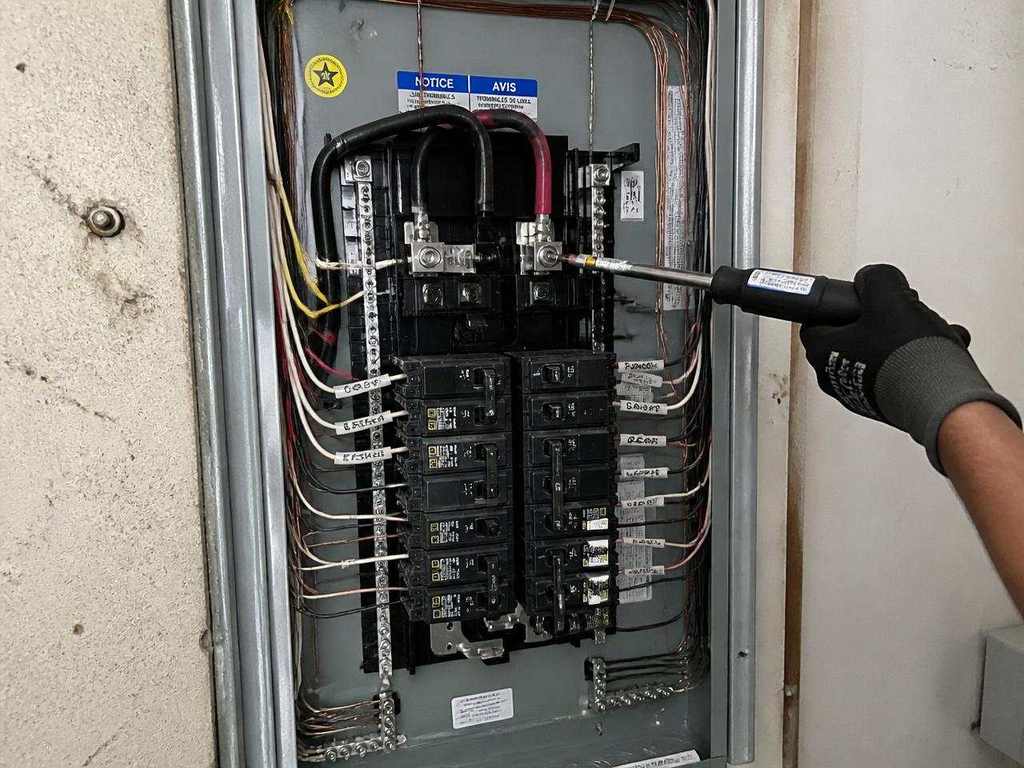
A circuit breaker is not a switch. It is a precision-engineered safety device whose entire job is to detect dangerous current conditions and disconnect power before something inside your walls catches fire. When a breaker trips, it is not malfunctioning. It is succeeding at its job. The question worth asking is not "how do I stop this from happening" but "what is the breaker protecting me from, and how do I fix the underlying cause."
Electrician guide: Why Breaker Keeps Tripping
Replacing a tripping breaker with a higher-amperage one is the electrical equivalent of stuffing a sock in your smoke detector. The breaker is sized to match the wire behind it. A 15-amp breaker protects 14-gauge wire. A 20-amp breaker protects 12-gauge wire. Put a 20-amp breaker on a 14-gauge circuit, and the wire will overheat long before the breaker trips. That overheat is how electrical fires actually start.
The four real reasons breakers trip
- Overload — too much current flowing for too long. Common in older kitchens (microwave plus toaster plus coffee maker on one 15-amp circuit), bathrooms (hair dryer plus space heater), and home offices (laser printer plus space heater plus monitors).
- Short circuit — a hot conductor making direct contact with a neutral or ground conductor. Trips instantly and often violently, sometimes with a visible flash. Damaged extension cords, a nail driven through Romex during a remodel, or a failed appliance with a melted winding are common causes.
- Ground fault — current leaking to ground through a path it shouldn't take, often a person, water, or a wet wire. GFCI breakers and GFCI receptacles detect this within milliseconds. This is the breaker type that's saved more lives than any other invention in residential electrical history.
- Arc fault — an unintentional electrical arc somewhere along the conductor. AFCI breakers (required by NEC in most living areas since 2014) detect the high-frequency signature of an arc and trip before it can ignite surrounding material. Common arc-fault causes are loose connections, damaged Romex from drywall screws, and aging insulation.
How to tell which one you actually have
The pattern of tripping is your best clue:
- Trips after a few minutes of heavy use → almost always an overload. The thermal sensor inside the breaker is heating up under sustained current. Solution: split the load across two circuits, or add a new dedicated circuit.
- Trips the instant you turn on one specific device → short or ground fault in that device. Solution: replace or repair the device, not the breaker.
- Trips randomly with nothing in particular running → typically AFCI, and these are the hardest to diagnose. Often a shared neutral on a multi-wire branch circuit, a damaged conductor inside a wall, or a backstabbed receptacle making intermittent contact.
- Trips immediately on reset, even with all loads disconnected → a fault in the wiring itself, not in any device. Stop resetting and call an electrician — repeatedly resetting into a hard fault stresses the breaker and the conductor.
What to do when a breaker trips
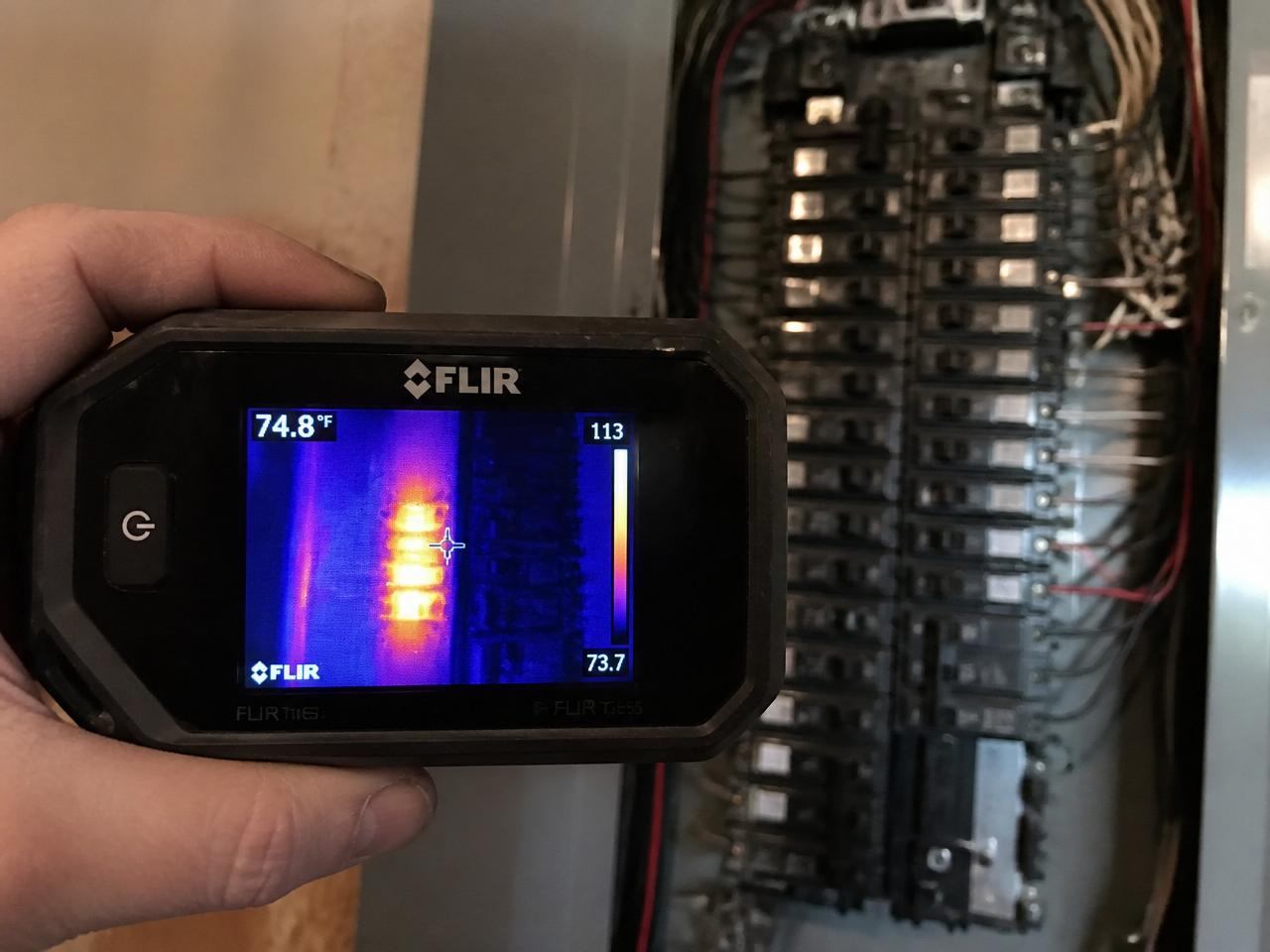
Step one: unplug every device on the affected circuit. Step two: reset the breaker by pushing it fully to OFF first, then to ON. Step three: plug devices back in one at a time. If a specific device causes the trip, that device is the problem. If the breaker trips with nothing plugged in, you have a wiring fault that needs a licensed electrician with a circuit tracer, an insulation tester, and a thermal camera to locate.
What you must never do
- Never replace a 15-amp breaker with a 20-amp breaker to "stop the nuisance." You've just overloaded the wire.
- Never replace an AFCI or GFCI breaker with a standard breaker. You've just disabled the device that's been saving your life.
- Never tape, wedge, or zip-tie a breaker handle into the ON position. This is a real thing people do. It is also a leading cause of attic fires.
- Never reset a breaker more than two or three times if it keeps tripping. You're stressing the mechanism and the conductor.
When to call a professional
Call a licensed electrician when: the breaker trips with no load, you smell anything hot or plasticky, you see scorching on the panel cover, the breaker feels warm to the touch, the same circuit trips repeatedly even after you've moved loads off it, or an AFCI/GFCI keeps tripping and a load test on each device clears them all. These all indicate a fault in the wiring or the panel itself, and they're not safe DIY territory.
Diagnostic tools we actually use
A real fault diagnosis takes more than a multimeter. We use insulation resistance testers (megger), thermal imaging cameras, circuit tracers, and clamp-on ammeters to isolate the exact location of the fault — often a single damaged conductor inside a finished wall — without tearing the house apart. Every visit ends with a written report: which circuit, which fault type, which fix.
Need a fault diagnosed?
If a breaker in your home is tripping and you can't isolate the cause in five minutes of methodical testing, call (626) 618-8360. A licensed electrician answers 24/7, every day. Most fault diagnoses are completed in a single visit.